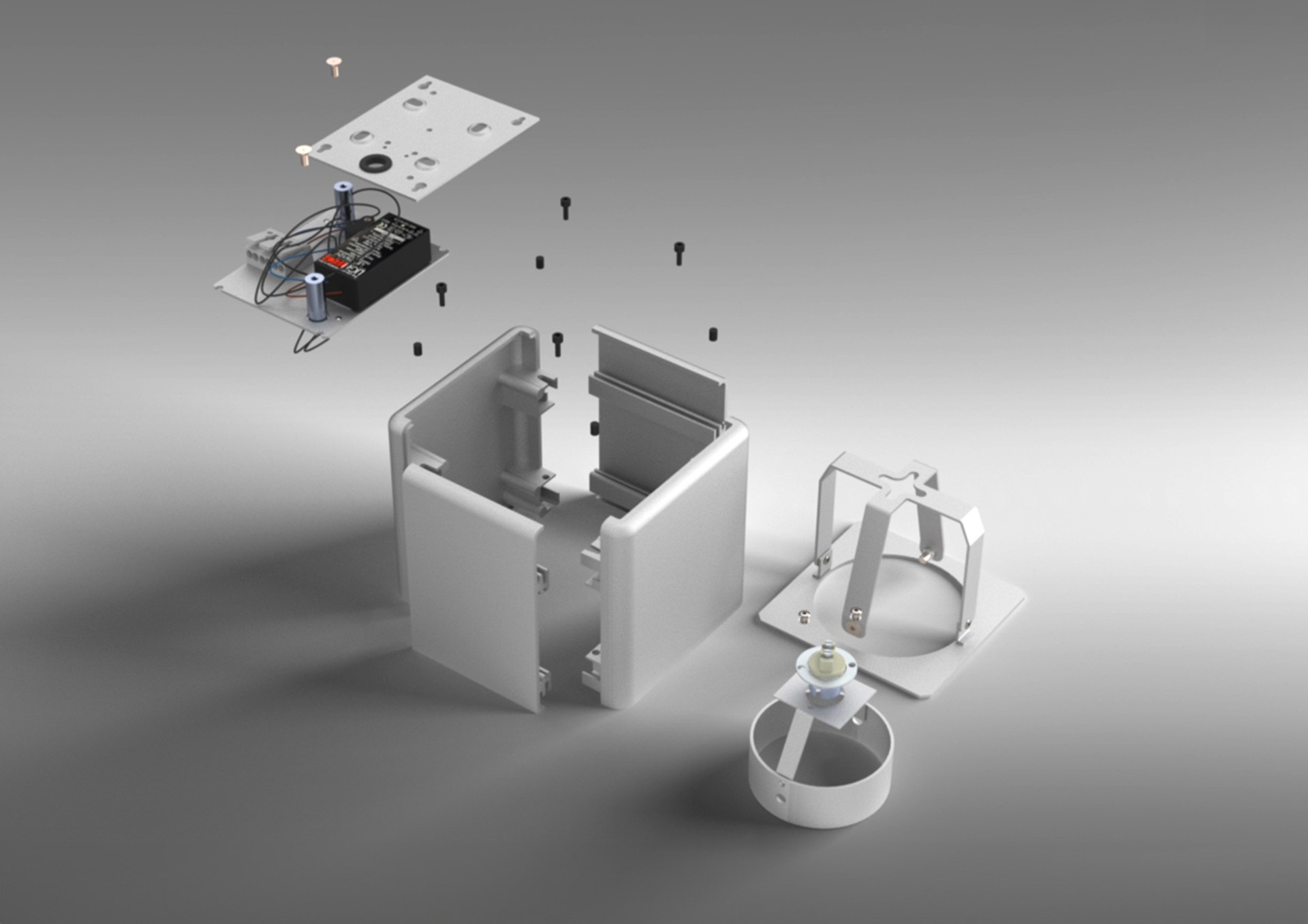
The existing product
The original design showed the functional idea of the product, but also revealed complexity in the way components were connected and assembled. This became the starting point for the redesign.
Redesigning a light accessory through clearer assembly, fewer parts, and a more efficient product structure.
Multami is a product optimisation project focused on the redesign of a modular light accessory. The project started by analysing the original product, its assembly logic, and its disassembly process. By questioning every component and every operation, the redesign aimed to make the product easier to assemble, easier to understand, and more efficient to produce.
Process
The project began with the existing Multami light accessory. Instead of starting from a blank page, the goal was to understand how the product was built, how it came apart, and where the assembly created unnecessary complexity.
By analysing the sequence of parts, screws, housing pieces, and internal components, we could identify which elements were difficult to assemble, which operations could be simplified, and where the redesign could make the product more efficient.
The existing product
The original design showed the functional idea of the product, but also revealed complexity in the way components were connected and assembled. This became the starting point for the redesign.
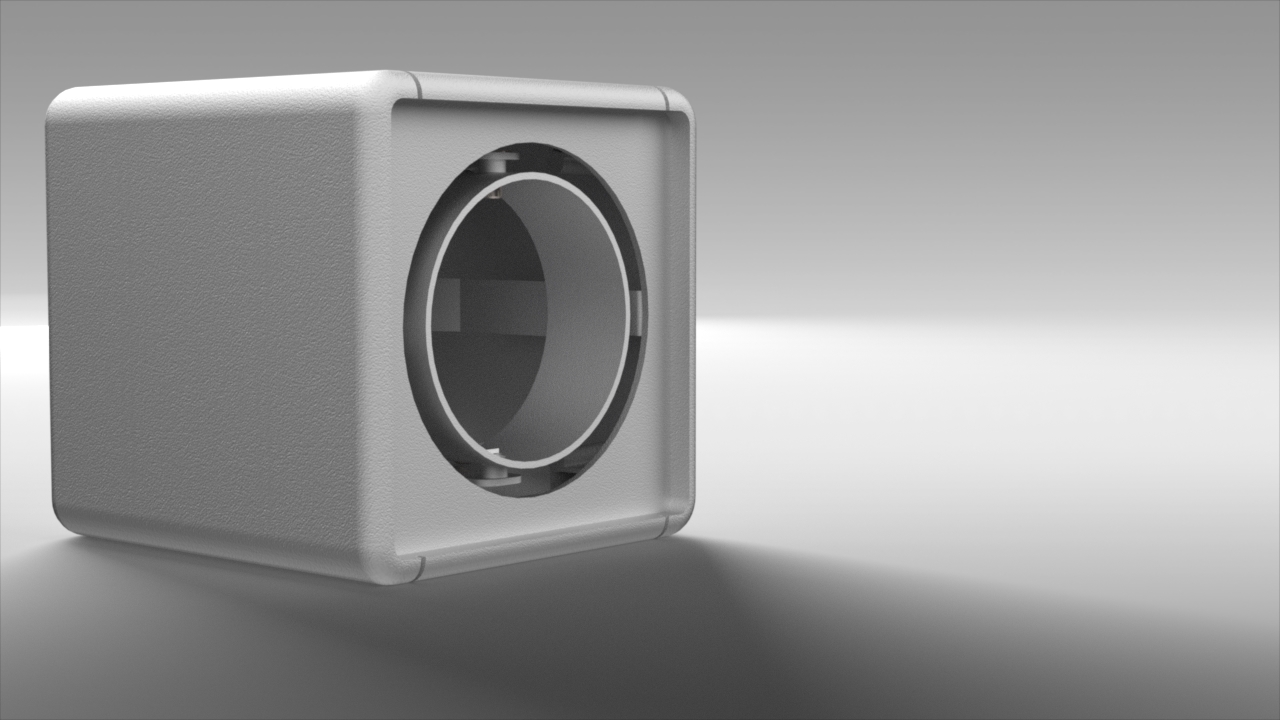
The redesigned product
The optimised design keeps the core function of the light accessory while improving the construction logic. The redesign focuses on fewer unnecessary operations, clearer part relationships, and a more efficient assembly flow.
The original product was taken apart step by step to understand the full assembly sequence and reveal how each component contributed to the overall construction.
Each part and operation was evaluated to identify unnecessary complexity, difficult assembly actions, and opportunities for simplification.
Based on the analysis, the product structure was adjusted. The redesign focused on clearer component relationships, fewer inefficient steps, and better integration of the internal parts.
The original and optimised assembly processes were compared visually to show how the redesign improved the product logic and made the assembly more efficient.
The product
The final outcome is not only a new external form, but a clearer product system. The redesign shows how small changes in component structure can influence the full assembly experience.
By comparing the original assembly process with the redesigned process, the project makes the improvement visible. The focus is on how the product is built, how the parts relate to each other, and how the assembly becomes more understandable.
Original design assembly
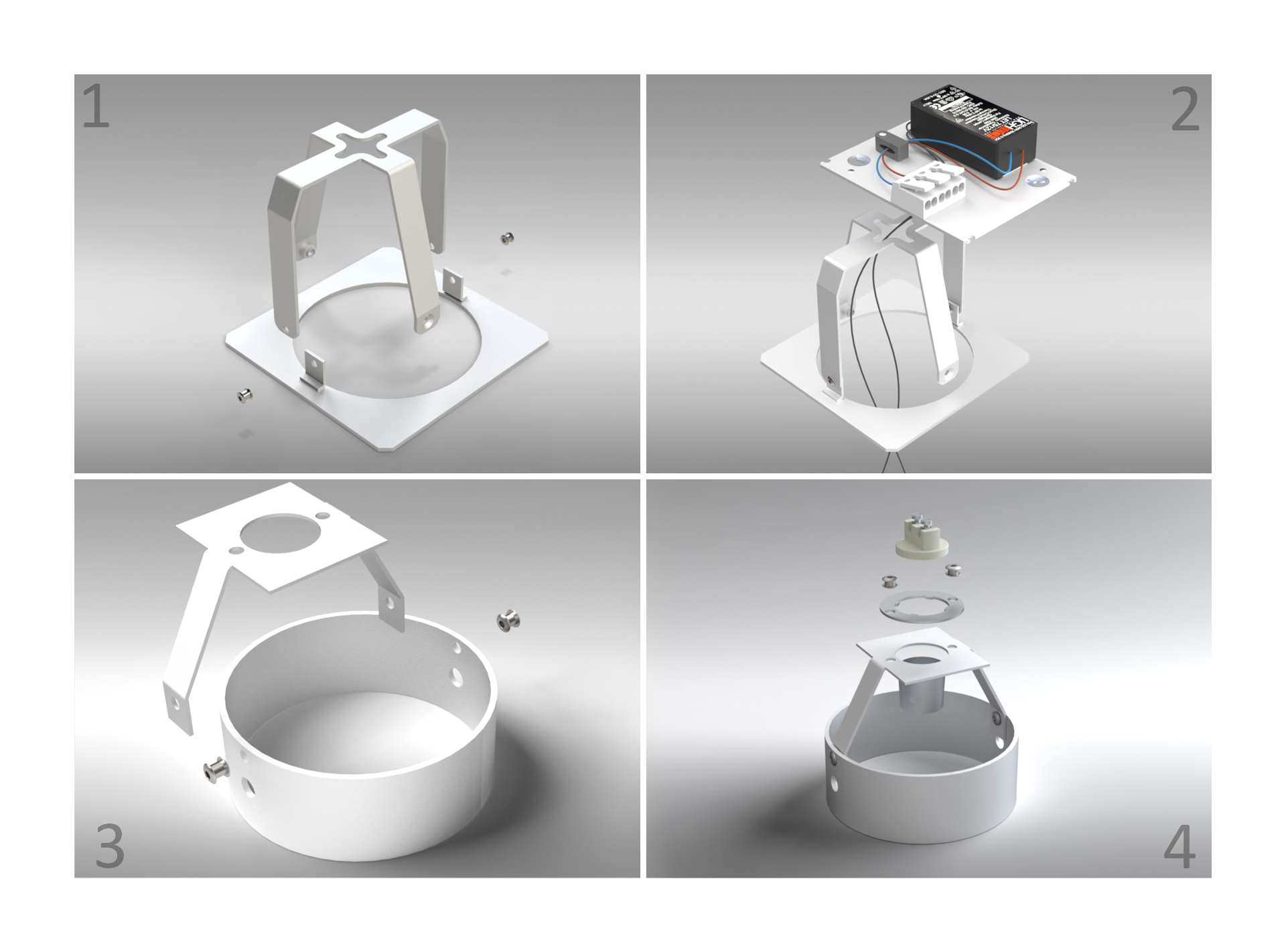
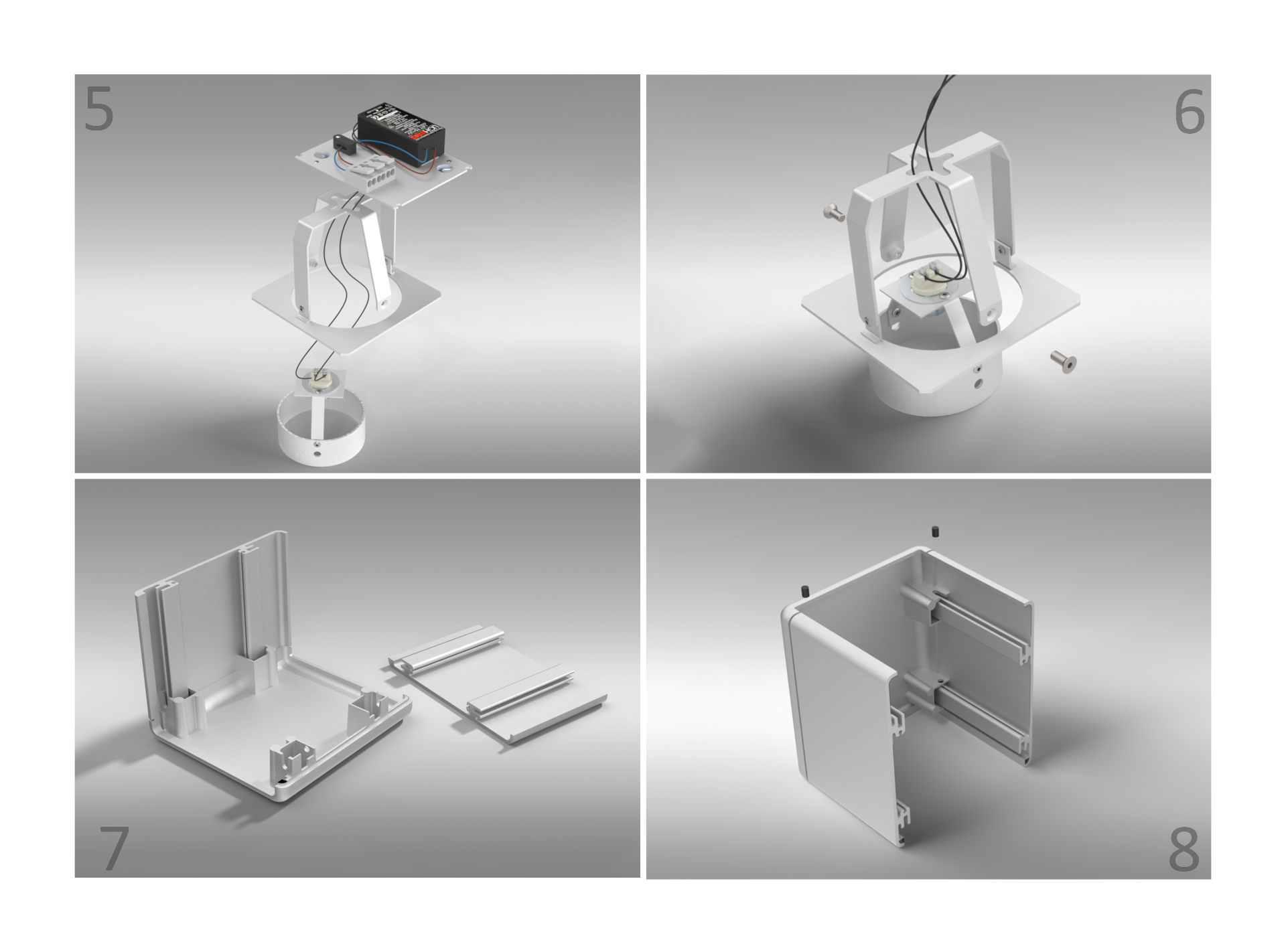
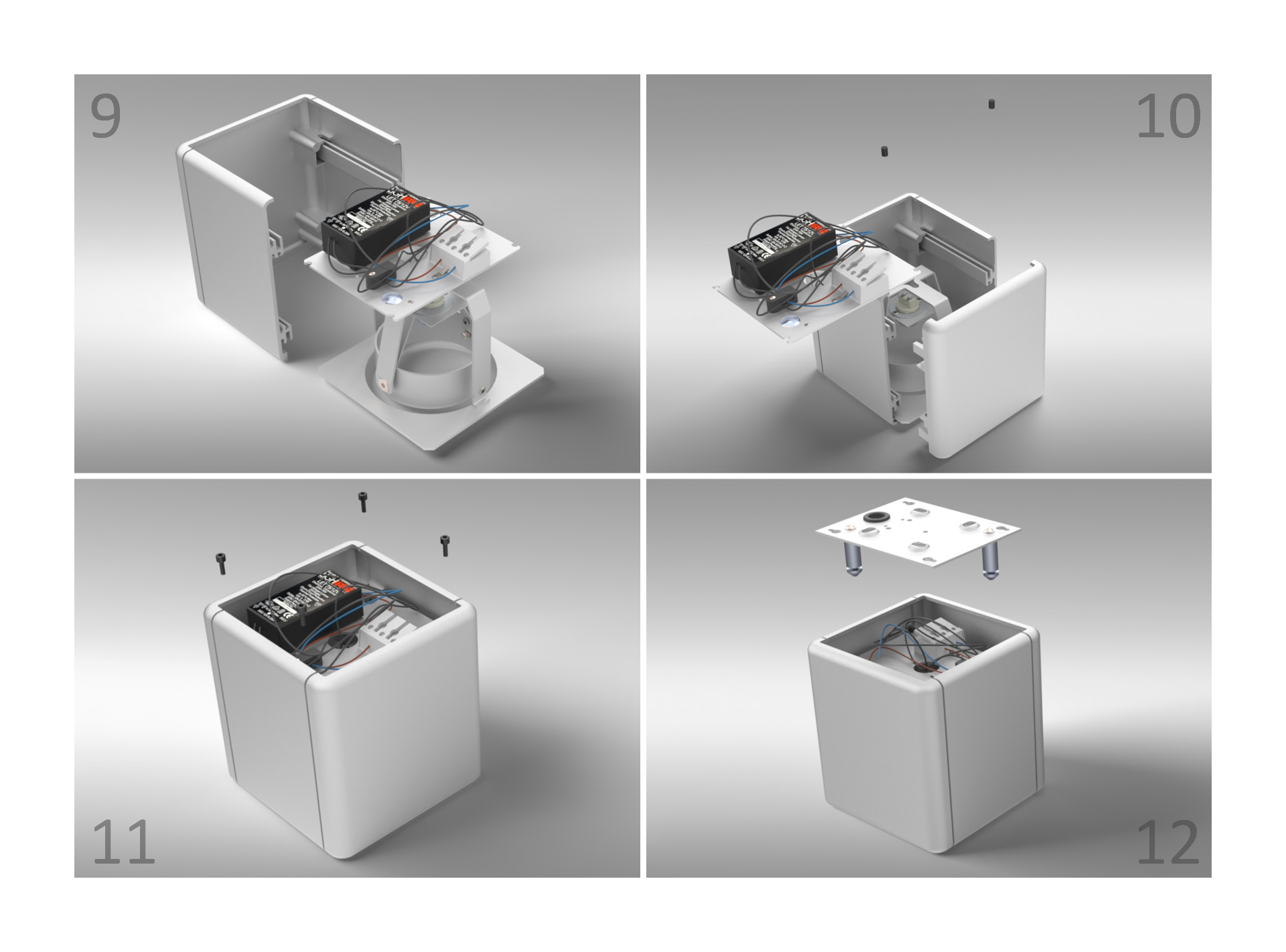
These visuals show the assembly logic of the original Multami light accessory. By breaking the product down step by step, the project made the construction process visible and revealed where unnecessary complexity, difficult operations, and inefficient component relationships appeared.
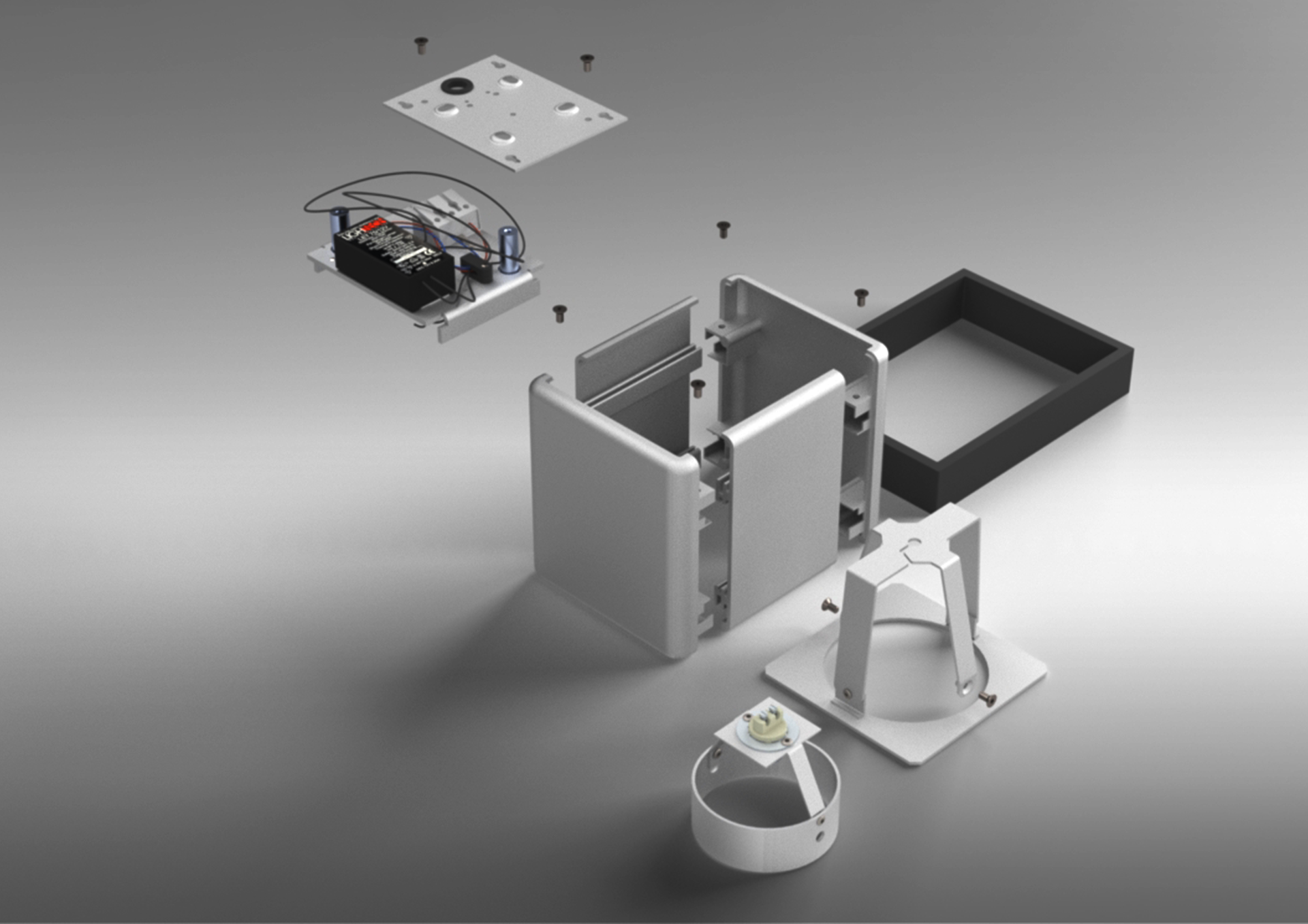
Optimised design assembly
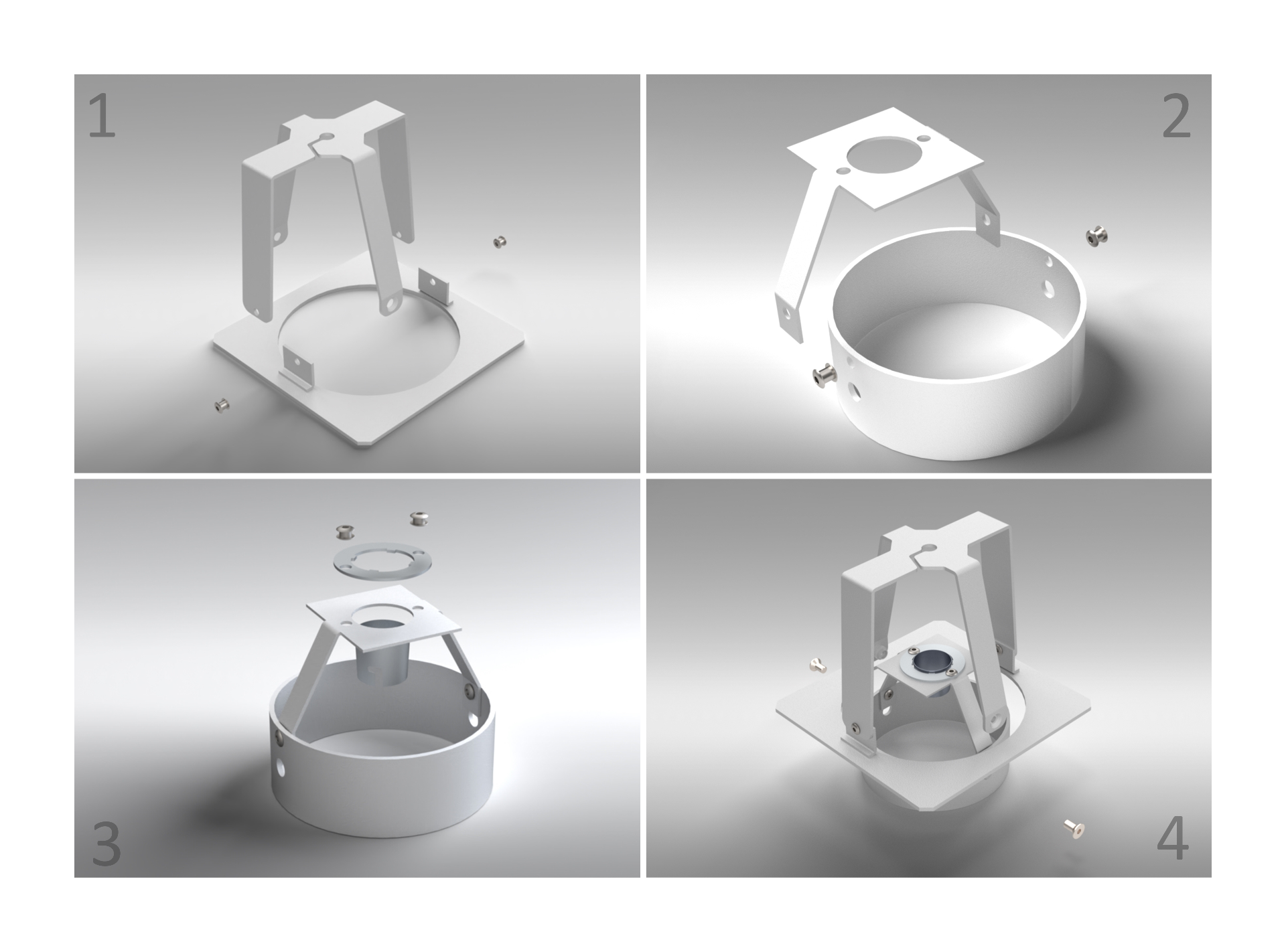
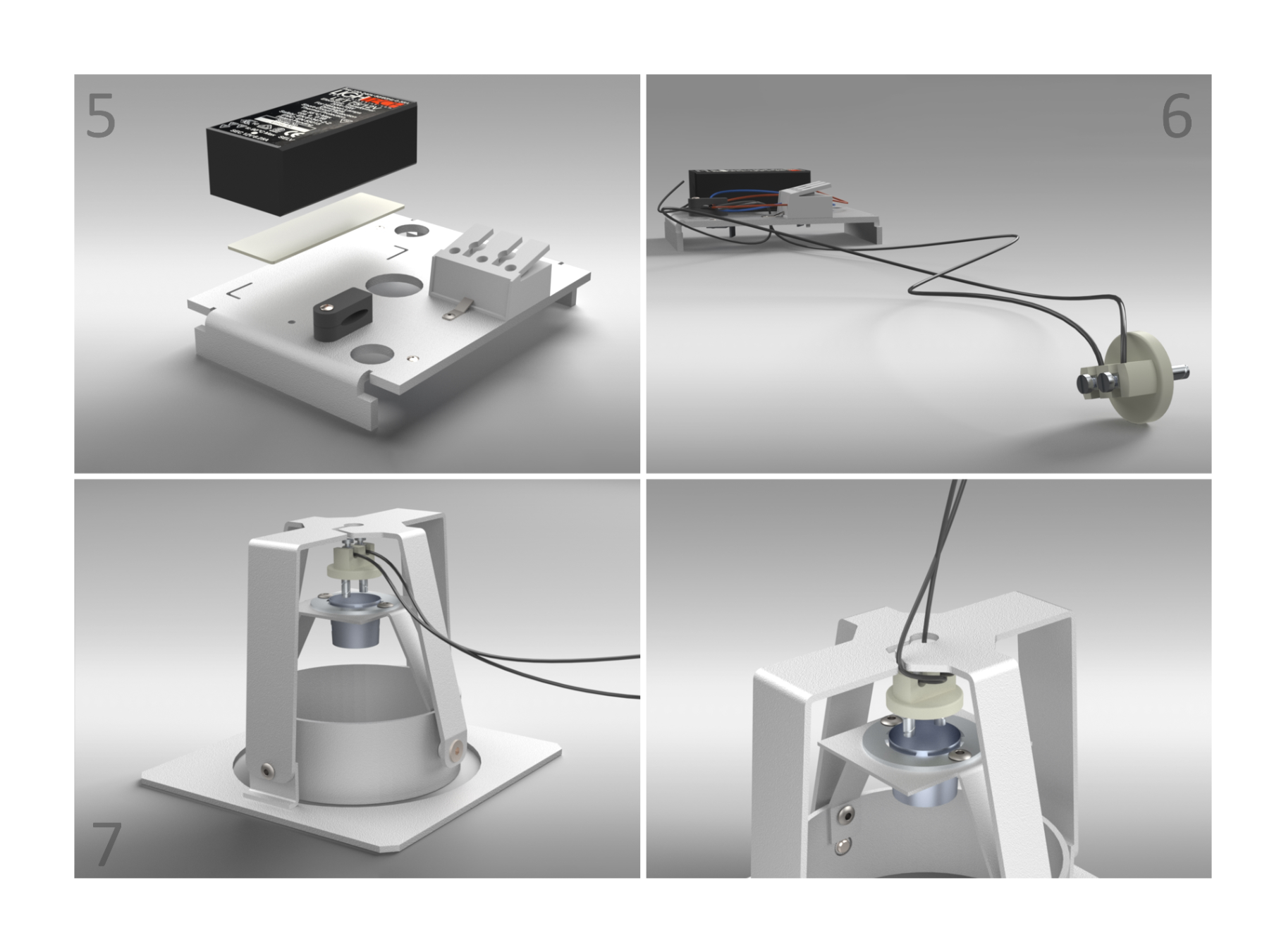
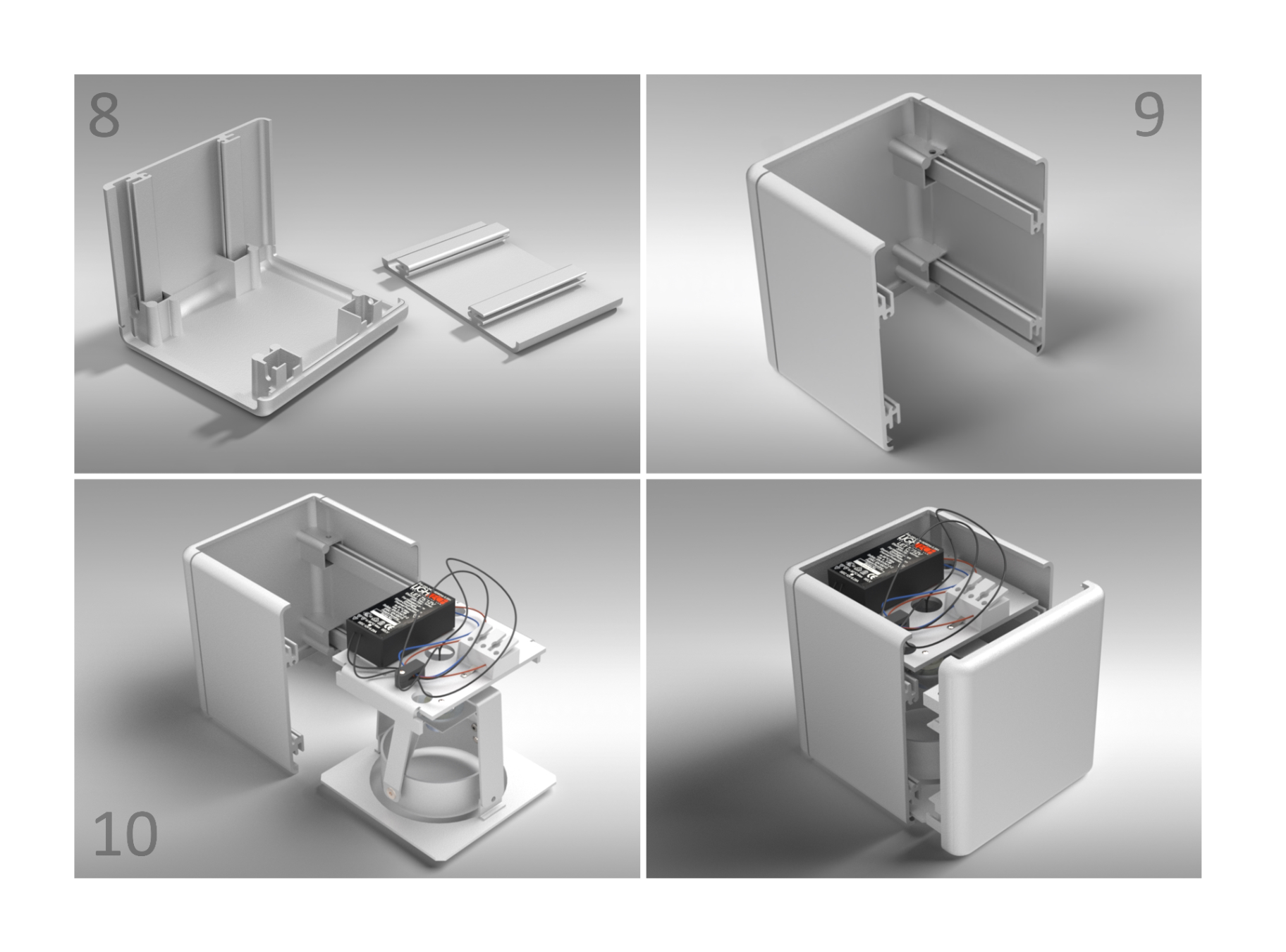
These visuals show the redesigned assembly logic. The optimised version reduces complexity, simplifies the part structure, and improves the sequence of assembly. The comparison makes the design improvement clear through the product's construction, not only through its appearance.